


Tonight I attended an excellent 90 minute Zoom workshop, “Hold the Line Election Defense,” hosted by Hold the Line and Freedom Trainers. It was well attended, and the chat was very active with lots of extra shared resources. I’ve included them at the end of this reflection.
The key message of the webinar was clear: If we are concerned about our upcoming midterm elections in the United States, in addition to voting and encouraging others in our respective spheres of influence to vote, we need to make connections NOW with others who share our concerns. By coming together for conversations through shared communication channels, we can think about and plan for collective actions we may need to take depending on what happens during and following our elections. If we need to act together to peacefully support respect for the democratic process, these relationships need to exist before the crisis. That was our homework after tonight’s webinar.
“Why I’m here”
The workshop facilitators asked each of us why protecting our elections matters. My answer: Our democracy requires vigilant protection. We have a responsibility to our fellow citizens, our families, and the world to help the light of representative democracy shine brightly.
Key ideas
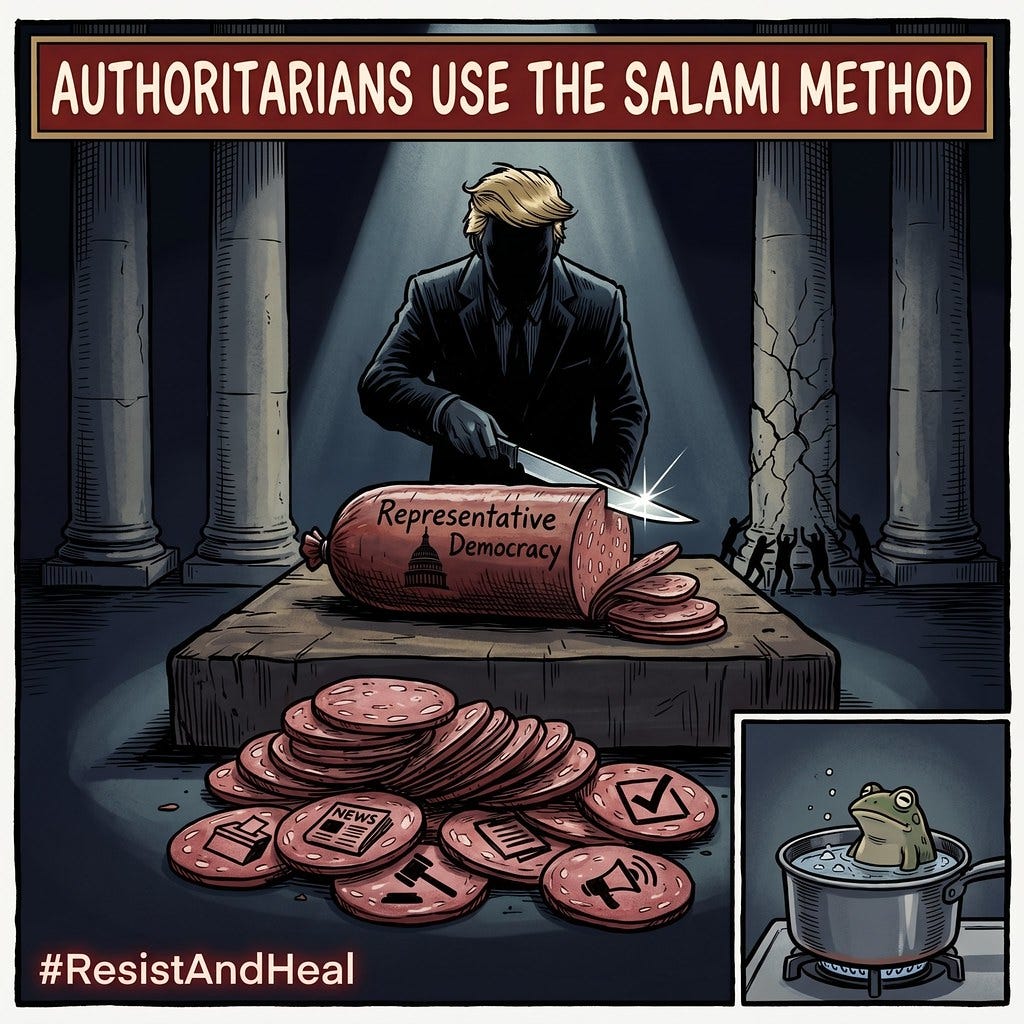
Authoritarianism is a system, not just a person. It tends to advance slowly and quietly, like the “salami method” of slicing away at democracy, or frogs in slowly heating water. Authoritarians are held up by organizations and institutions that give them support. One slide noted that the share of the world’s population living in autocracies grew from 50% in 2005 to 74% in 2025, so the U.S. is not alone in facing this.
A successful election is free, fair, respected, and safe. Hold the Line also shared six principles, including working together, treating others with respect, committing to nonviolent means, and holding each other accountable.
Four “red lines” help us identify threats:
Voter disenfranchisement
Election betrayal and disinformation
Refusal to accept valid election results
Incitement or enactment of political violence or persecution related to the election
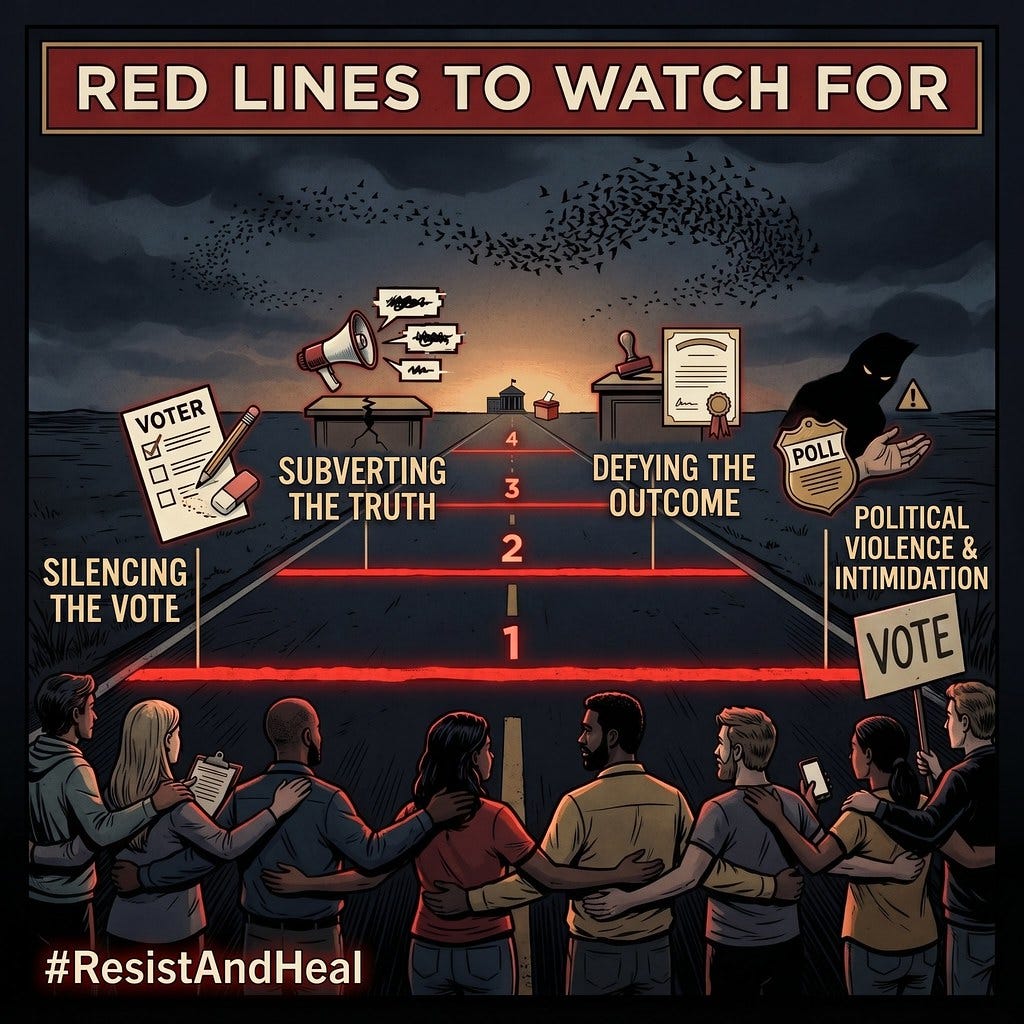
When a red line is approached, we organize and alert: Get to know officials, secure commitments, and tell people the facts. When one is crossed, we take action using a pre-determined response plan.
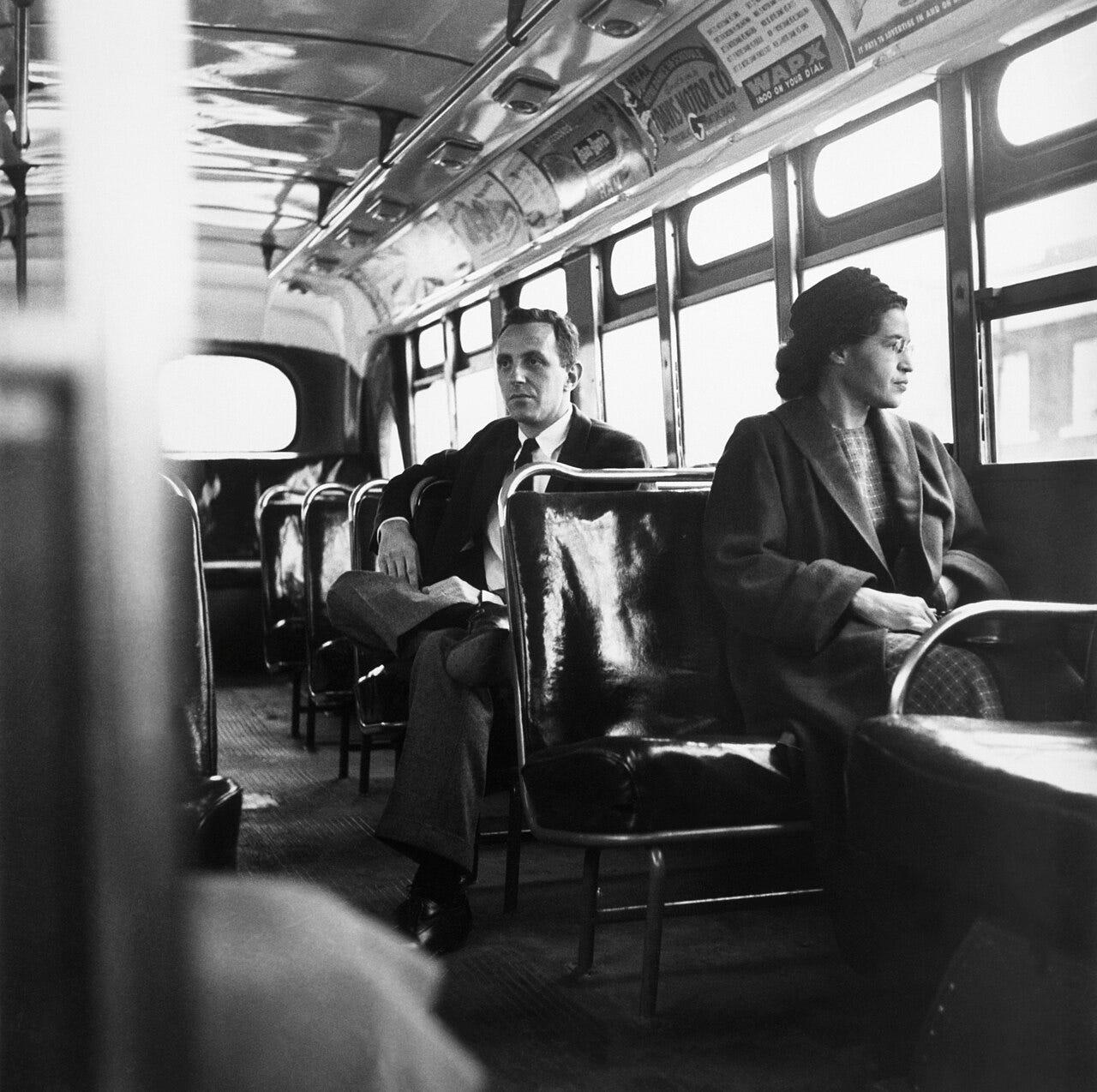
Noncooperation works when many pillars of society take part. Think of the military, schools, government, business, religion, and media. Enough noncooperation can make a pillar defect, or at least become unreliable for an autocrat’s aims. The workshop pointed to research in “Why Civil Resistance Works: The Strategic Logic of Nonviolent Conflict” and to examples from Brazil, Chile, Guatemala, and the Montgomery Bus Boycott, which lasted over a year.

Preparation beats luck. Two case studies stood out:
Florida, 2000: a crowd descended on the Miami-Dade counting office and the canvassing board halted the recount that day, citing safety concerns. A few hundred votes out of six million decided the outcome.
Detroit, 2020: when two members of the Wayne County Board of Canvassers voted to block certification, word spread fast through pre-existing organizing networks. Hundreds of residents flooded the Zoom public comment session, and the board reversed course and certified unanimously. Detroit wasn’t luck. It took preparation.
Speed and silence matter. Courts are not reliable backstops. Doing nothing is a huge risk, and silence can be read as consent. We need to tell the story through media before others do. It is better to mobilize and have to stand down than to under-mobilize.
“Lean into radical uncertainty, and have a bias toward action despite the information that you don’t know.” (Doran Schrantz, former Director of ISAIAH, shared in the workshop)
Three things must exist together: people who know when something is wrong and can say so clearly, grassroots groups ready to respond quickly, and real connections between those groups built before the crisis. You can have insiders with information but no network to call, or an energized network with no early warning, or both and still fail if they have never practiced connecting.
My own addition: Sharing trusted voices and setting up secure communication channels is just as important. This is where media literacy and community organizing meet.
What you can do this week
Don’t skip the basics:
Make sure you are registered to vote, and check again regularly between now and Election Day
Make a plan to vote, and vote early if you can
Make sure at least three other people you know do all of the above
Sign up to be a poll worker or poll observer
Then organize:
Ask friends and neighbors if they have double checked their registration
Talk with them about safeguarding elections locally, and ask if they want to join you
Find out who is already doing election work in your area and plug in
Learn when your local election results will be certified
Ask yourself: Can you set up rapid response communication with your group now?
If you’re a member of a church, school, union, or neighborhood group, you already have an intact group. Start there.
Show notes and resources
Organizations and ways to connect
Hold the Line PAC, host of the call (Wednesday tactical calls follow this intro call - sign up for their email newsletter for links)
Freedom Trainers and their election defense resources
Email defend@holdthelineguide.org or schedule a 30 minute call with the Hold the Line team
Reading and viewing
Why Civil Resistance Works: The Strategic Logic of Nonviolent Conflict by Erica Chenoweth and Maria Stephan
A Force More Powerful, a documentary series on nonviolent movements
The Anti-Authoritarian Playbook Substack by Scot Nakagawa
“What To Do During a Coup” by Ash-Lee Woodard Henderson
Salami slicing tactics (Wikipedia)
Saul Alinsky’s Rules for Radicals and Reveille for Radicals (suggested in the chat)
Tools and shared resources
Interactive map of contested 2026 races: pick a state where you know someone and ask them to vote, ideally early
Look Loud Election Defense Visual Drive: shared graphics and visuals
If you want to prepare your own ballot with direct links to official candiate websites, my project Interactive Ballot can help. Vote early!
Let’s strive to act as culture healers, not culture warriors, and build the connections now that can sustain us through whatever challenges lie ahead..
#ResistAndHeal #HoldTheLine #ElectionDefense #Democracy
AI Attribution: I used Claude to help organize my webinar notes into this draft. I then added hyperlinks and multiple edits. Follow my AI learning journey on ai.wesfryer.com.